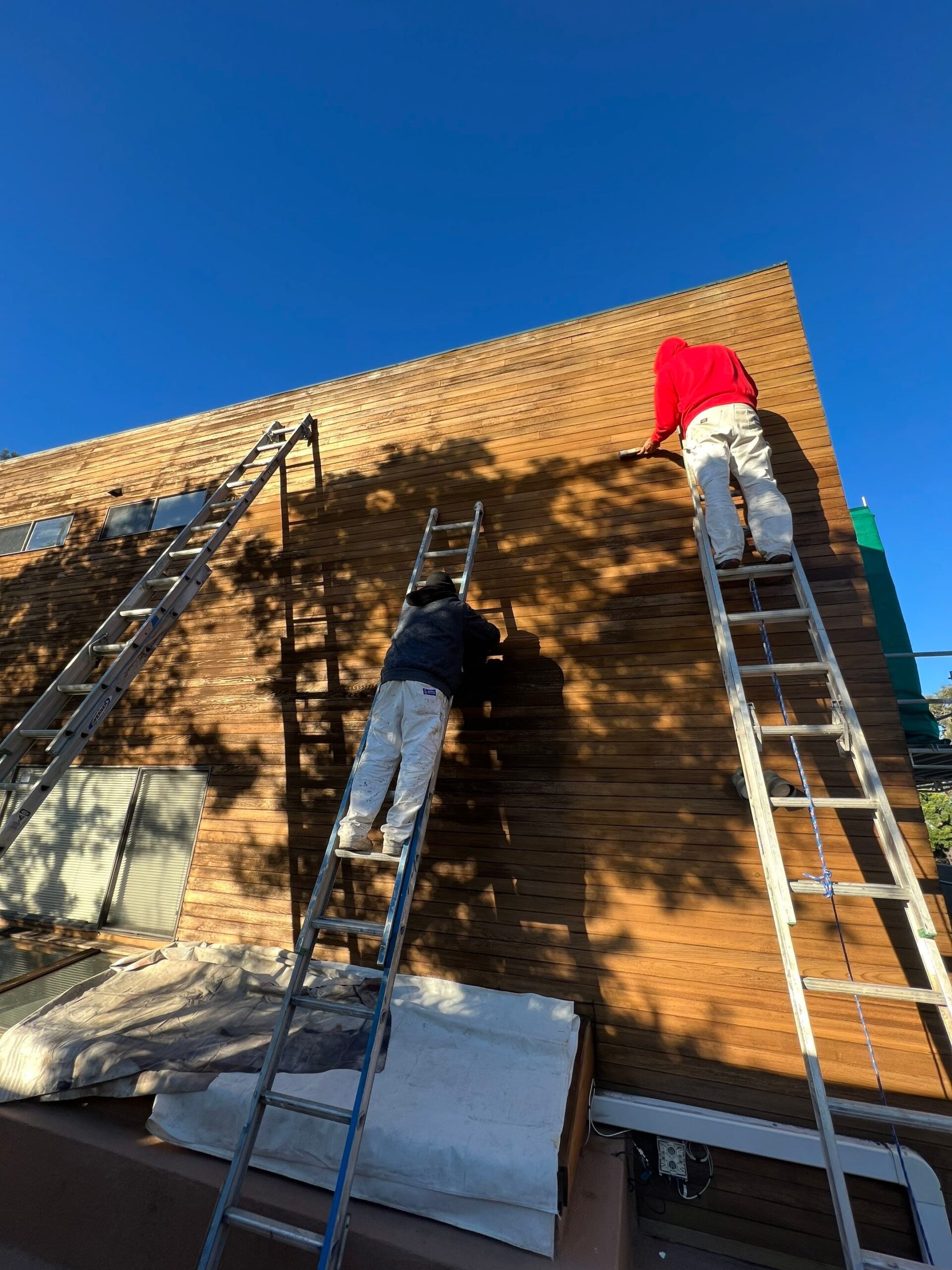
When homeowners see a freshly painted room or beautifully restored exterior, the finished color is usually what gets the attention.
But some of the most important work happens before the first coat of paint ever touches the surface.
At Peek Brothers Painting, we believe professional painting is only as good as the preparation underneath it. That’s why our process goes far beyond simply arriving with brushes, rollers, and paint.
Before we begin painting, our team carefully evaluates the surfaces, identifies potential problems, prepares the work area, completes necessary repairs, and creates the right foundation for the new coating.
It’s not always the most visible part of the project, but it’s one of the biggest reasons a professional paint job can look better and last longer.
Before preparation begins, we evaluate the condition of the surfaces we’re going to paint.
We look for:
This initial inspection helps determine what needs to be addressed before painting begins.
A wall that looks fine from across the room may have imperfections that become much more noticeable once a fresh coat of paint is applied.
A professional painting project should protect the areas that aren’t being painted, too.
Depending on the project, our team carefully protects:
For interior projects, protecting your belongings is especially important. For exterior projects, landscaping and surrounding property require careful attention.
This preparation helps minimize mess and allows our team to work efficiently without unnecessarily disrupting your home.
Paint doesn’t adhere properly to dirt, dust, grease, mildew, or other contaminants.
That’s why cleaning is an important part of our preparation process.
For exterior surfaces, this may involve removing:
For interior surfaces, cleaning may focus on removing dust, grease, fingerprints, and other contaminants that could interfere with adhesion.
A clean surface gives the coating a much better foundation.
One of the biggest mistakes in painting is applying a new coating over problems that should have been repaired first.
Depending on the project, preparation may include:
These repairs help create a smoother, more uniform appearance while also addressing issues that could affect the performance of the new coating.
If existing paint is peeling, cracking, or failing, simply painting over it won’t solve the underlying problem.
Our team removes loose or failing material and sands surfaces where appropriate.
Sanding can help:
This attention to detail becomes especially important on doors, trim, cabinetry, and other highly visible surfaces.
Primer isn’t necessarily required on every surface, but when it’s appropriate, choosing and applying the right primer can make a significant difference.
Primer may help:
The right primer depends on the surface, existing coating, and specific project requirements.
By the time the first coat is applied, much of the important work has already happened.
The surface has been inspected, cleaned, repaired, sanded, and primed where necessary.
That preparation gives the finish coat the foundation it needs to perform properly.
Whether we’re completing interior painting, an exterior painting service, or kitchen cabinet painting services, the goal is the same: create a finish that looks beautiful and performs as expected.
Before preparation begins, we evaluate the condition of the surfaces we’re going to paint.
We look for:
This initial inspection helps determine what needs to be addressed before painting begins.
A wall that looks fine from across the room may have imperfections that become much more noticeable once a fresh coat of paint is applied.
A professional painting project should protect the areas that aren’t being painted, too.
Depending on the project, our team carefully protects:
For interior projects, protecting your belongings is especially important. For exterior projects, landscaping and surrounding property require careful attention.
This preparation helps minimize mess and allows our team to work efficiently without unnecessarily disrupting your home.
Paint doesn’t adhere properly to dirt, dust, grease, mildew, or other contaminants.
That’s why cleaning is an important part of our preparation process.
For exterior surfaces, this may involve removing:
For interior surfaces, cleaning may focus on removing dust, grease, fingerprints, and other contaminants that could interfere with adhesion.
A clean surface gives the coating a much better foundation.
One of the biggest mistakes in painting is applying a new coating over problems that should have been repaired first.
Depending on the project, preparation may include:
These repairs help create a smoother, more uniform appearance while also addressing issues that could affect the performance of the new coating.
If existing paint is peeling, cracking, or failing, simply painting over it won’t solve the underlying problem.
Our team removes loose or failing material and sands surfaces where appropriate.
Sanding can help:
This attention to detail becomes especially important on doors, trim, cabinetry, and other highly visible surfaces.
Primer isn’t necessarily required on every surface, but when it’s appropriate, choosing and applying the right primer can make a significant difference.
Primer may help:
The right primer depends on the surface, existing coating, and specific project requirements.
By the time the first coat is applied, much of the important work has already happened.
The surface has been inspected, cleaned, repaired, sanded, and primed where necessary.
That preparation gives the finish coat the foundation it needs to perform properly.
Whether we’re completing interior painting, an exterior painting service, or kitchen cabinet painting services, the goal is the same: create a finish that looks beautiful and performs as expected.
San Diego homes face a variety of environmental conditions.
Depending on location, exterior surfaces may experience:
These conditions can gradually wear down exterior coatings.
Thorough preparation helps ensure the new coating is applied to a stable, clean, properly conditioned surface.
For coastal properties, this is particularly important because salt and environmental buildup can interfere with adhesion and contribute to premature deterioration.
Professional preparation is important across many painting projects, including:
A kitchen cabinet painter, for example, needs to approach preparation differently than an exterior house painter.
Cabinet surfaces require careful cleaning, sanding, preparation, and product selection because they experience frequent handling and wear.
Once the project is complete, most homeowners aren’t going to see the hours spent cleaning, sanding, scraping, repairing, and priming.
That’s the point.
The preparation is designed to create a finished result that looks smooth, clean, and professional.
The difference often becomes apparent later, when a properly prepared surface continues to perform while a rushed paint job begins to peel, crack, or deteriorate.
This is one reason homeowners comparing exterior house painting contractors shouldn’t compare estimates based solely on the number at the bottom of the proposal.
Ask what’s happening underneath the paint.
At Peek Brothers Painting, we believe homeowners deserve to understand what they’re paying for.
A premium painting project isn’t simply about the paint product. It’s about the process behind the finished result.
That means:
From an interior house painter to a team completing a full interior exterior painting project, the same philosophy applies.
The finished paint job may be what you see, but the preparation is what helps make it possible.
At Peek Brothers Painting, we take the time to prepare surfaces properly because we know that beautiful results begin long before the paint goes on.
If you’re searching for cabinet painters near me, local interior painters, exterior house painters in my area, or a professional San Diego painting company, don’t just ask what color will be used.
Ask how the surface will be prepared.
Contact Peek Brothers Painting today to schedule your consultation and learn what our behind-the-scenes preparation process can do for your home.
The finished paint job may be what you see, but the preparation is what helps make it possible.
At Peek Brothers Painting, we take the time to prepare surfaces properly because we know that beautiful results begin long before the paint goes on.
If you’re searching for cabinet painters near me, local interior painters, exterior house painters in my area, or a professional San Diego painting company, don’t just ask what color will be used.
Ask how the surface will be prepared.
Contact Peek Brothers Painting today to schedule your consultation and learn what our behind-the-scenes preparation process can do for your home.