
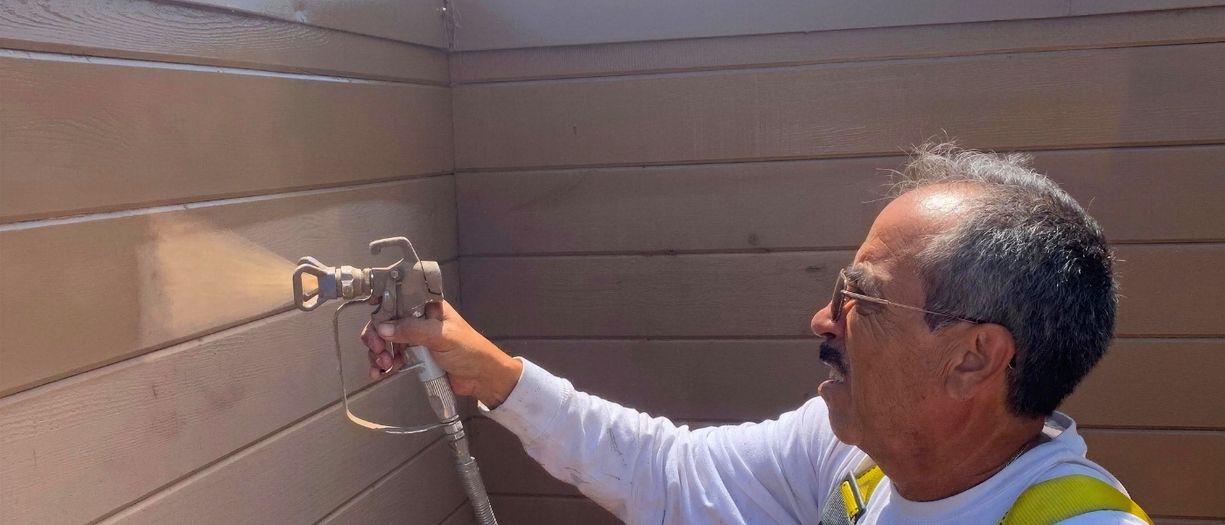
When homeowners think about how long a paint job will last, they often focus on the type of paint being used.
Is it premium?
Is it durable?
Is it designed for exterior use?
Those questions matter, but there’s another factor that can be just as important:
What happened before the paint was applied?
Professional surface preparation is one of the foundations of a long-lasting paint job. Even a premium coating can struggle when it’s applied over dirt, loose paint, damaged surfaces, moisture problems, or an unstable existing coating.
At Peek Brothers Painting, we believe the quality of the finished paint job starts before the first coat ever goes on.
Paint doesn’t simply need to cover a surface.
It needs to properly adhere to it.
If the surface underneath is dirty, chalky, peeling, greasy, or unstable, the new coating may not bond as effectively as it should.
That can eventually contribute to problems such as:
Proper preparation helps create a clean and stable foundation for the coating.
Over time, exterior surfaces collect dirt, dust, salt, moisture, and other environmental contaminants.
Interior surfaces can accumulate grease, dust, smoke residue, and everyday grime.
If these contaminants aren’t addressed before painting, they can interfere with the coating’s ability to adhere properly.
For coastal San Diego homes, cleaning can be particularly important because exterior surfaces can be exposed to salt air and moisture.
A professional exterior painting service should evaluate the condition of the surface and determine the appropriate cleaning and preparation methods before applying paint.
If existing paint is peeling or flaking, adding another coat over it doesn’t address the underlying problem.
The failing material needs to be removed or stabilized as part of the preparation process.
Depending on the surface, this may involve:
The goal is to establish a more stable surface before the new coating is applied.
Fresh paint can make certain imperfections more noticeable.
Cracks, holes, damaged trim, deteriorated wood, and other surface problems may need to be addressed before painting.
Repairs can include:
A smooth, stable surface gives the finish coat a better foundation.
Sanding can help remove rough areas, smooth repairs, improve adhesion, and create a more consistent surface.
The amount of sanding required depends on the existing coating and the condition of the surface.
For some projects, extensive sanding may be necessary.
For others, only targeted sanding may be appropriate.
Professional preparation is about knowing what the surface actually needs rather than following a single process for every home.
Exterior homes contain many joints and transitions around windows, doors, trim, siding, and other architectural details.
Over time, caulking can become cracked, brittle, or separated
These areas may need to be addressed before painting.
Properly maintained caulking can help create cleaner lines while reducing opportunities for moisture to reach vulnerable areas.
For coastal homes, paying attention to these details is especially important.
Primer can serve several important purposes depending on the surface and project.
It may be used to:
However, primer isn’t automatically necessary everywhere.
The right approach depends on the surface, existing coating, and product system being used.
A professional painter should know when primer provides meaningful value.
Coastal San Diego homes are exposed to environmental conditions that can affect exterior coatings.
These can include:
Over time, these conditions can contribute to fading, chalking, cracking, peeling, and other forms of paint deterioration.
That’s why preparation is especially important for homes near the coast.
A quality exterior paint job should be planned around the conditions the coating will have to withstand.
Coastal San Diego homes are exposed to environmental conditions that can affect exterior coatings.
These can include:
Over time, these conditions can contribute to fading, chalking, cracking, peeling, and other forms of paint deterioration.
That’s why preparation is especially important for homes near the coast.
A quality exterior paint job should be planned around the conditions the coating will have to withstand.
The most important part of a painting project may be the part you never see.
The scraping.
The sanding.
The cleaning.
The repairs.
The caulking.
The priming.
Those steps disappear once the final coat is applied, but they can play an important role in how that coating performs.
So the next time you’re comparing painting contractors, don’t just ask:
“What paint are you using?”
Also ask:
“How are you preparing my home for that paint?”
Because when it comes to long-term paint performance, prep isn’t just part of the process. Prep is the foundation of the result.
If you’re planning an interior painting, exterior painting, or professional cabinet painting project in San Diego, contact Peek Brothers Painting to discuss your project and learn what preparation your home requires.